



































































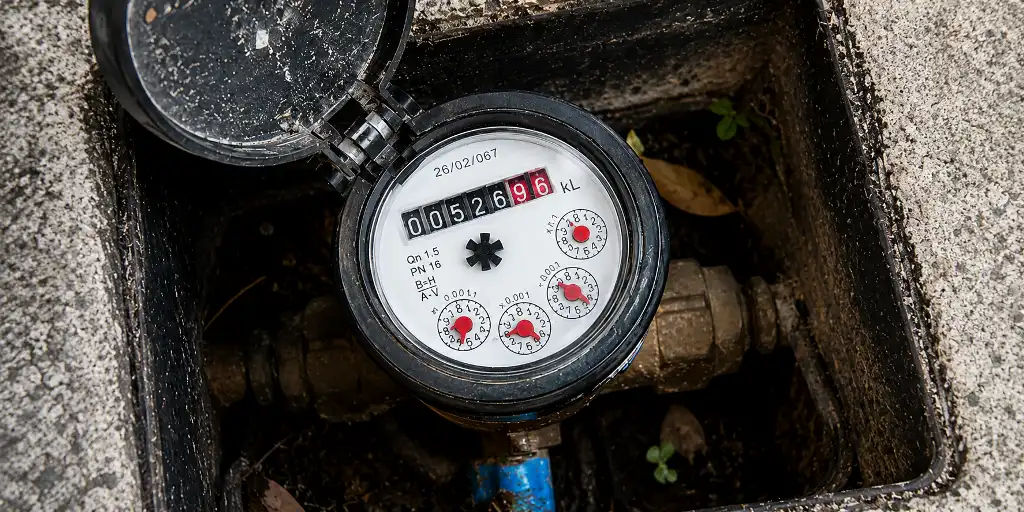
Sydney homeowners who receive a shock bill for water are likely doing what most of them do in such a scenario. They look at it, conclude it must be a meter reading mistake, call Sydney Water to complain about it, and then they pay it. What few do — and it takes only about 10 minutes — and it costs nothing, is to actually take the time to go outside and open the water meter box, and determine if water is actually flowing through the pipes when all the faucets and valves in the house are turned off.
That one test can provide you with more information about what is going on inside your home’s plumbing than almost any other test available. But if the meter is moving when it shouldn’t, you’re pretty sure you have a leak somewhere, and it could be siphoning money out of your wallet for weeks, months even before that bill came through.
Here’s how to do it, how to determine what it’s costing you and what you can do if the numbers say there’s something wrong.
The reason why hidden leaks are so prevalent
The hard part about hidden leaks is the most costly are generally the quietest. A leaking tap is an annoyance that will be patched sooner or later by most. However, no sound, no recognized mess and no visible damage until the water bill arrives at a weeping joint under the floor, a slow seep behind a bathroom wall or a crack in a pipe beneath the concrete slab which stains the ceiling when the time comes.
Most homeowners are unaware of the number of leaks under slabs and in walls that occur in Sydney. The pipes used in homes constructed between the 1960s and 1990s are usually copper or galvanised steel pipes that have been subjected to the mildly corrosive effects of Sydney’s water, ground movement and hot summers for many years. Joints loosen with the passage of time and pipes develop pinhole corrosion allowing water to slowly and steadily escape.
Just one drop per second can waste approximately 30 litres per day! That may be humble until you do the sums on a water bill. If there’s a leak in the pipe that’s emitting a bit more, like 3 litres per hour, it’s still very low, and you can’t hear it, but it equals over 2,000 litres per month – in Sydney, that’s real money you’re paying for water that never made it to the tap.
The Meter Test: Step by Step
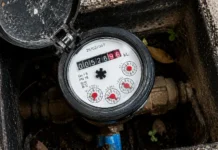
No tools are needed for this. All you need to know is the location of your water meter (this is typically a small metered box, which is usually located near your front boundary set in your footpath or garden – you can use this location as a guide) and a few minutes patience.
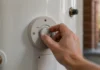
Step 1: Shut down all water in the house. Turn off every tap. Don’t run the dishwasher or washing machine, keep no one in the shower, don’t set the irrigation time and don’t just flush the toilets. If anything was running in the house in the recent past, allow the house 5 minutes to calm down.
Step 2 — Go to the meter and record the meter reading. The Sydney Water meters are modern and have a digital display as well as dials. Record all digits that can be seen, including decimal places if they can be seen. Get a picture of it on your cell phone so that you can view it later without any hassle — it’s a better idea than trying to read your own handwriting later on.
Step 3 — Do not use any water and wait for 1 hour. Don’t flush the toilet, don’t wash your hands, don’t run the kitchen tap. 1 whole hour with no water usage in the home. If this is not feasible, then 30 minutes is OK — just divide in half when working out.
Step 4. Read the meter again. Compare to number written down.
If not there is no flow detectable through the meter. This is what you want to see.
If the reading has changed — even by a small amount — water has been running through your pipes while taps in the house were off. The leak is between the meter and fixtures.
To determine the true cost of your business spending.
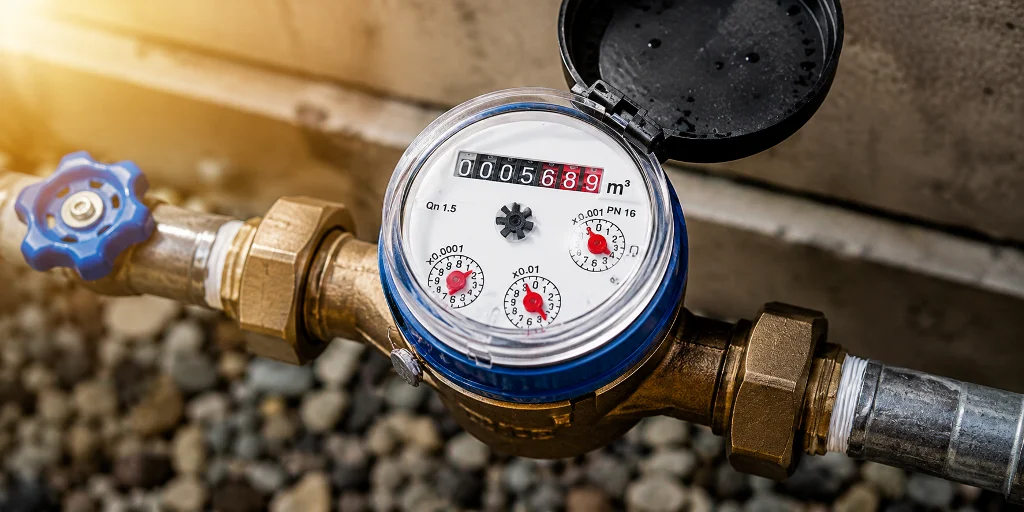
There are two readings, after which the maths is simple.
Calculate the difference between the 2 readings to find the volume used in litres for that hour. To find out the leakage per day multiply by 24. Multiply by 30 to obtain an estimate for the monthly count.
The charges for Sydney Water are progressive but on a rough estimate, if you are using the first tier of charges then you are paying about $2.35 per kilolitre (1,000 litres) for your water in 2026. So if your meter was moving 50 litres per hour that’s 1,200 litres per day or 36,000 litres per month, or about 36 kilolitres a month, at today’s prices that equates to nearly $1,000 a year or just over $85 a month. Until it’s under your feet on the floor or in your subfloor, it doesn’t make a sound and doesn’t cause damage.
The leak can be so small that no one would ever hear it, and yet it would be 3,600 litres per month, which translates to nearly $100 per quarter on your water bill—you won’t know why.
It makes sense to do a Toilet Check at the same time.
Make one final quick check before you call anyone. Sydney houses lose a significant amount of water from their toilets in the background – and a leaking toilet cistern is virtually silent.
Place some food colouring in the cistern (not in the toilet bowl) and leave it for 15 minutes without flushing. If colour goes into the bowl even when you do not press the flush button it means the flap valve inside the cistern is not closing correctly and water is continually escaping from the cistern through the flap valve into the bowl, and out through the sewer. It takes less than 20 minutes to replace a new flap valve which can cost a few dollars from any hardware store, and can result in a loss of 200 litres of wasted water per day.
The Sydney Water Hidden Leak Allowance is here to help with the hidden leaks in your home, but it only covers specific types of leaks.
This is part of the Sydney home owner that many don’t know about!
In Sydney, the water company has a scheme where people can get a “Hidden Leak Allowance”. If you find a leak that you didn’t know was there, that’s not a dripping tap or an appliance problem: it’s a real hidden leak in your pipes and you might be able to have some of the water usage you’ve incurred deducted from your bill.
The key is to have the leak fixed by a licensed plumber, get an invoice from the plumber and submit within a certain window after the billing cycle. You also have to prove that it was not reasonably practicable to know about the leak earlier. Not all applications are approved, and most times, you are only going to be able to get a portion of the excess back; however, if your bill was needlessly inflated due to a leak that you didn’t know about, it can help a lot.
If you detected a hidden leak in your meter during the test, record it before attempting to make repairs. Shoot pictures of the meter reading, record the date and time, and hold on to these records when applying. Tradetek Solutions have broken down how the Sydney Water Hidden Leak Allowance works and what documentation you’ll need — check out their guide on water bill hikes before making contact with Sydney Water.
How to know when to call a licensed plumber.
If the meter came off during your test and the toilet wasn’t to blame, the next step is leak detection — and in this case, you’re better off leaving the job to a professional.
Acoustic listening tools can locate water movement in walls, floor, and slabs without any digging or cutting needed, and these tools are used by licensed plumbers. Thermal imaging can detect differences in temperature due to water collection inside wall cavities. CCTV pipe inspection can give you an idea of the condition of the pipe in the ground and tell you if there are any cracks or separations in the pipe that are allowing water to escape.
This is important because the location of a leak and where moisture can be seen are not necessarily the same. The water will flow through the entire structure where the pipe is leaking, meaning that if the pipe is leaking under a concrete slab, it could be dripping in another part of the house. If the plumber is digging blindly, he can cause major damage. Use of appropriate detection equipment by the right plumber can enable them to locate the cause within a few centimetres and only open the thing that needs to be opened.
If your leak test shows a substantial leak (> 50 or 100 l/h), do something about it! Lubricated for weeks that finally enter your home cause rot, mould and damage to your subfloor that is much more costly to repair than the bill for the water that caused the leak to be detected.
Do This Test Every Few Months
The water meter test is a test that is a 10 minute process that could save you hundreds of dollars. The only people who think about doing it are after an electric or gas bill comes and they are shocked; once every three or four months, you will find you will find the leak early before it has a chance to soak a wall or triple your electric or gas bill.
Schedule an alarm on your cell phone. Outside, at the meter, wait for 1 hour, and look at the meter again. If there is no action, then move on to the next year. If there was movement, you now have a clear starting point for your investigation.
This post is written by Tradetek Solutions team.