
































































The Next Era of Computing Explained: AI, Quantum, and IoT in Plain English
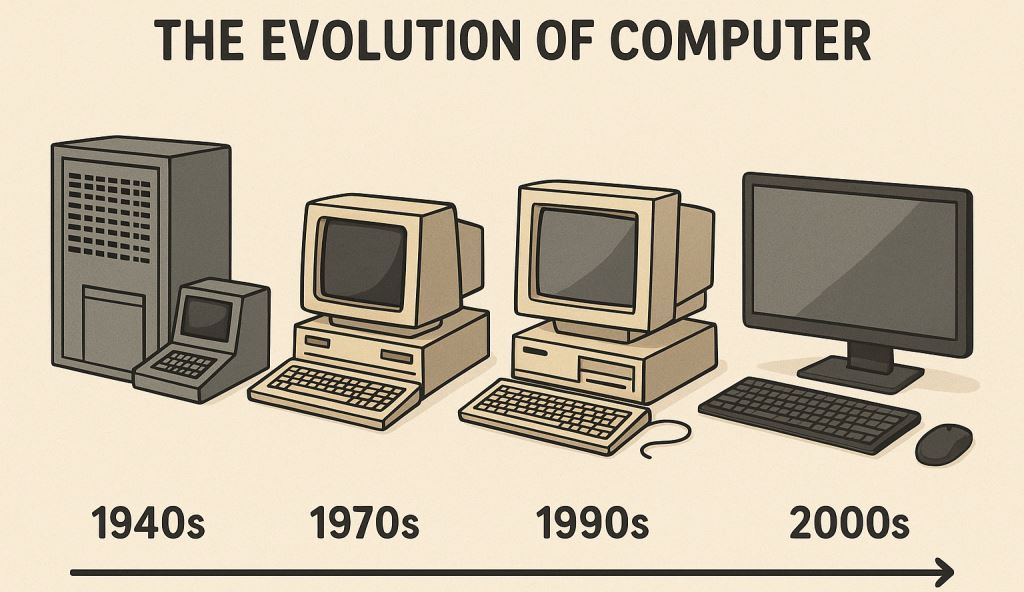
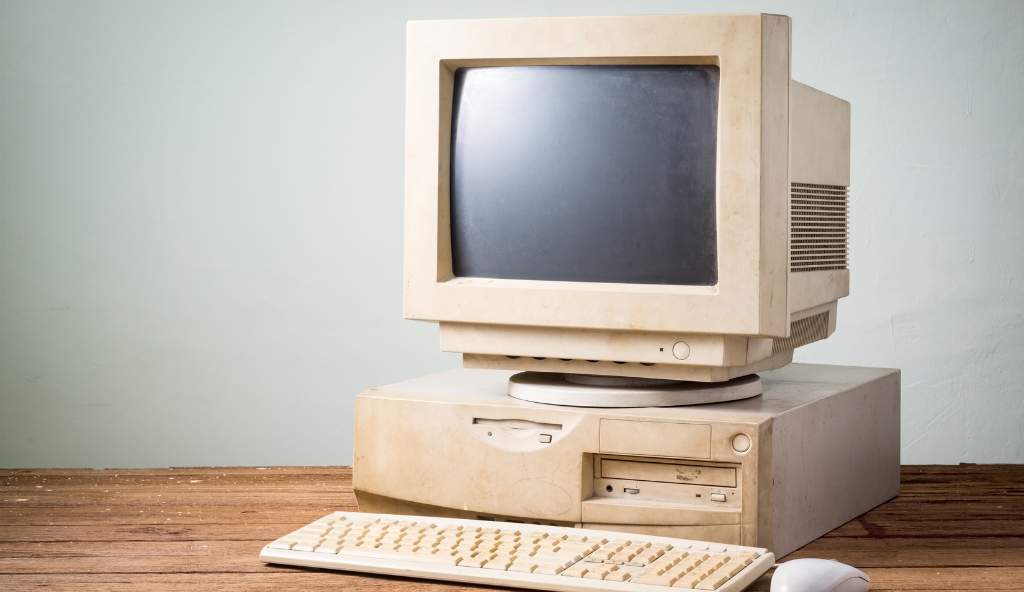
For seventy years, computing progress followed one simple pattern: chips got smaller, faster, and cheaper. That era — the one that took us from room-sized machines to the phone in your pocket — is now giving way to something different. The next wave of computing isn’t just “faster of the same.” It’s three genuinely new paradigms: artificial intelligence, quantum computing, and the Internet of Things.
These three terms get thrown around constantly, usually with more hype than explanation. This guide breaks down what each one actually is, how it works in plain language, what it’s good for, and where its limits are — so you can understand the technologies shaping the next few decades rather than just nodding along to the buzzwords.
1. Artificial Intelligence: Computers That Learn Instead of Being Told
What it actually is
Traditional software follows explicit instructions a programmer wrote: “if this, do that.” Artificial intelligence flips this. Instead of being told exactly what to do, AI systems learn patterns from data and make predictions or decisions based on them.
The subset doing most of the heavy lifting today is machine learning — and within that, deep learning, which uses layered “neural networks” loosely inspired by how neurons connect in the brain.
How it works, simply
Show a machine-learning model millions of examples (say, photos labelled “cat” or “not cat”), and it gradually adjusts internal values until it can correctly classify new photos it’s never seen. It isn’t following a rule you wrote for what a cat looks like; it worked out the pattern itself from the examples.
The large language models behind tools like modern chatbots do the same thing with text: trained on enormous amounts of writing, they learn the statistical patterns of language well enough to generate coherent responses.
What it’s good for
- Recognising images, speech, and text
- Recommendations (what to watch, buy, read)
- Prediction (demand forecasting, fraud detection, medical risk scoring)
- Generating text, images, and code
Its limits
AI is only as good as its training data — biased data produces biased results. It can be confidently wrong, doesn’t truly “understand” in a human sense, and raises real questions about privacy, transparency, and accountability. It’s a powerful pattern-matcher, not a mind.
2. Quantum Computing: A Fundamentally Different Kind of Machine
What it actually is
This is the one most people find baffling, so here’s the key idea: quantum computers don’t just do the same calculations faster — they compute in a fundamentally different way, based on the physics of the very small (quantum mechanics).
The core difference: bits vs qubits
- A classical computer stores information in bits, each either 0 or 1. Everything your phone or laptop does is ultimately billions of these on/off switches.
- A quantum computer uses qubits, which — thanks to a property called superposition — can represent 0 and 1 at the same time in a combined state. Link qubits together (via entanglement) and the machine can explore an enormous number of possibilities simultaneously.
The practical upshot: for certain very specific problems, a quantum computer could evaluate a staggering number of combinations at once, solving in minutes what would take a classical supercomputer longer than the age of the universe.
What it’s good for (and not)
Quantum computing isn’t going to replace your laptop — it’s terrible at everyday tasks. It’s aimed at a narrow set of extremely hard problems:
- Cryptography (potentially breaking, and also creating, encryption)
- Drug discovery and materials science (simulating molecules, which is naturally a quantum problem)
- Optimisation (finding the best option among astronomically many, e.g. logistics)
Its limits
Quantum computers today are experimental, extraordinarily difficult to build, and error-prone — qubits are fragile and must be kept near absolute zero. It’s a genuinely emerging technology, not something you’ll own soon.
3. The Internet of Things: When Everyday Objects Get Online
What it actually is
The Internet of Things (IoT) is the simplest of the three to grasp: it’s the extension of internet connectivity into ordinary physical objects — devices that were never “computers” in the traditional sense.
Your smart thermostat, video doorbell, fitness tracker, connected car, and the industrial sensors on a factory floor are all IoT devices: physical things with sensors and network connections that collect and exchange data.
How it works, simply
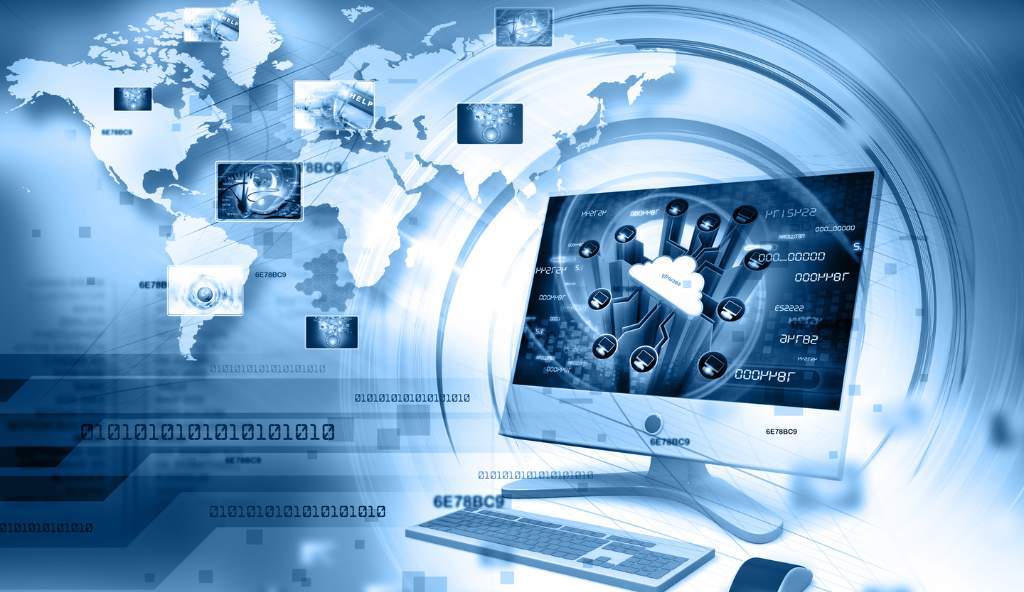
An IoT device has three basic parts: sensors (to collect data — temperature, motion, location, heart rate), connectivity (to send that data over a network), and often a cloud service (to process the data and send back instructions). Your smart thermostat senses the temperature, sends it to the cloud, and adjusts based on rules or learning.
What it’s good for
- Smart homes (lighting, heating, security, appliances)
- Wearables and health monitoring
- Industrial monitoring and predictive maintenance
- Smart cities (traffic, energy, waste management)
- Supply-chain and asset tracking
Its limits
More connected devices means a much larger “attack surface” for security threats — every device is a potential entry point. IoT also raises significant privacy questions (these devices are always collecting data) and creates challenges around standards and interoperability.

How the Three Fit Together
Here’s what makes this era genuinely new: these technologies aren’t separate — they reinforce each other.
- IoT generates the data. Billions of sensors produce enormous streams of real-world information.
- AI makes sense of it. Machine learning turns that flood of IoT data into predictions and decisions — spotting a failing machine before it breaks, or optimising a city’s traffic.
- Quantum (eventually) tackles the hardest problems neither classical computing nor current AI can efficiently solve.
Together they mark a shift from computing that simply processes what we tell it to computing that senses, learns, and reasons about the world — a genuine break from the smaller-faster-cheaper era that came before.
The Bigger Picture: How We Got Here
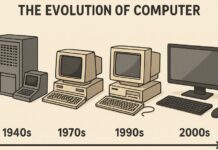
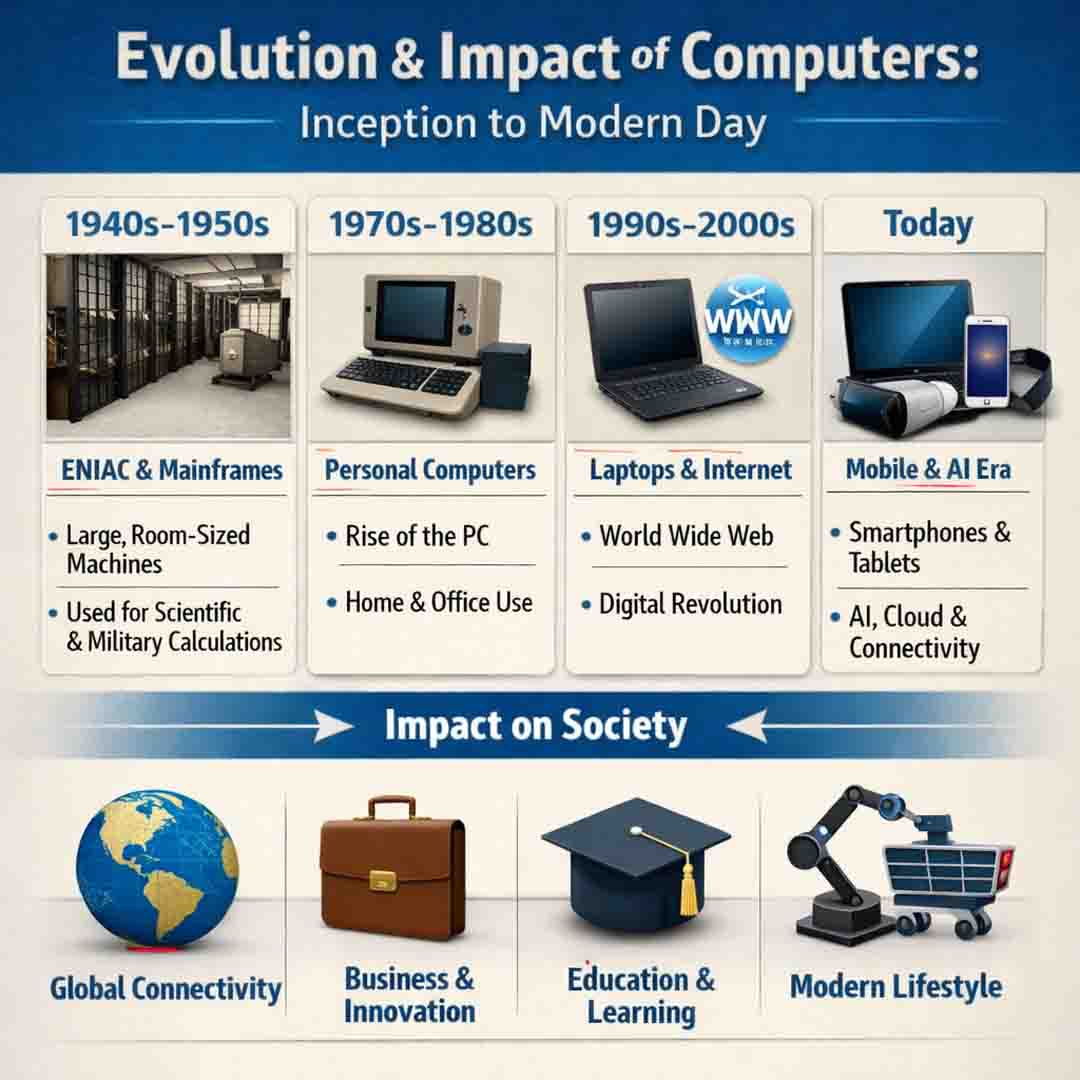
Understanding where computing is going is far richer when you understand where it came from — the mechanical engines of Babbage and Lovelace, the room-sized ENIAC, the transistor and microprocessor revolutions, the personal computer, and the internet. Each era’s breakthrough set up the next, and today’s AI, quantum, and IoT wave stands directly on that foundation.
CountDeals has a genuinely sweeping overview of that whole journey: the evolution and impact of computers from inception to the modern day, tracing the full timeline from the abacus to the technologies discussed here. If this look at the future sparked your curiosity, that history is the perfect companion read for the complete picture.