





































































Amazon PPC Management & Specialist Services: The Complete Guide to Scaling Your Brand
Amazon is the world’s largest e-commerce marketplace — but visibility is not guaranteed, which is why understanding SEO strategies for online businesses is also important for long-term growth.— but visibility is not guaranteed. With over 9.7 million sellers competing for the same customers, winning on Amazon in requires more than great products. It demands expert PPC management, data-driven listing optimisation, and a specialist who understands Amazon’s A10 algorithm inside out.
Amazon advertising — the numbers that matter
| Metric | Figure (2024/2025) |
| Amazon advertising revenue | $56 billion+ |
| Active Amazon sellers globally | 9.7 million |
| Sellers using PPC to drive initial sales velocity | 76% |
| Average ROAS for optimised Amazon PPC campaigns | 3–5× |
| Average Amazon CPC across all categories | $1.22 |
| Percentage of Amazon revenue from third-party sellers | 61% |
What is Amazon PPC and why does it matter in ?
Amazon PPC (Pay-Per-Click) is a paid advertising system that lets sellers promote their products directly within Amazon’s search results, product detail pages, and across Amazon’s wider display network. You pay only when a shopper clicks your ad — but the impact stretches far beyond that click.
Amazon PPC matters for three reasons: organic reach alone is no longer sufficient in most categories, PPC performance feeds directly into organic ranking signals, and Amazon’s advertising tools have become sophisticated enough that poorly managed campaigns actively hurt profitability rather than help it.
A well-managed PPC campaign isn’t an expense — it’s a compounding growth investment. Every dollar of ad spend that generates sales also generates reviews, ranking improvements, and organic traffic that compounds over time.
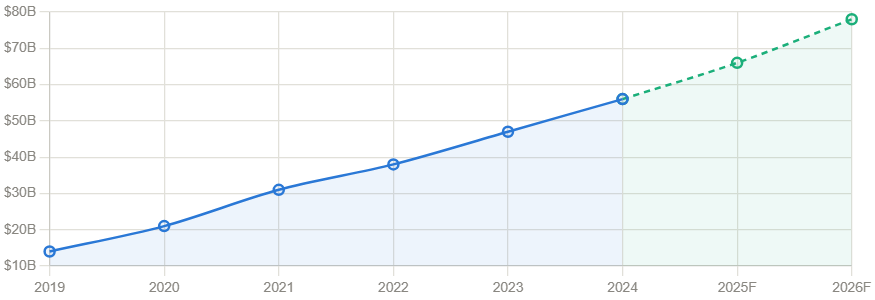
Amazon advertising revenue growth (USD billions):
| Year | Revenue | Status |
| 2019 | $14B | Actual |
| 2020 | $21B | Actual |
| 2021 | $31B | Actual |
| 2022 | $38B | Actual |
| 2023 | $47B | Actual |
| 2024 | $56B | Actual |
| 2025 | $66B | Forecast |
| 2026 | $78B | Forecast |
The 3 core Amazon ad types — compared
| Ad type | Where it appears | Best for | Avg. CTR | Avg. CPC | Difficulty |
| Sponsored Products | Search results + product pages | Direct sales, all sellers | 0.4–0.8% | $0.50–$2.00 | Beginner–Inter. |
| Sponsored Brands | Top of search results | Brand awareness, registered brands | 0.3–0.6% | $0.80–$3.00 | Intermediate |
| Sponsored Display | Amazon + external sites | Retargeting, category conquest | 0.1–0.3% | $0.30–$1.50 | Advanced |
| Amazon DSP | Amazon + third-party sites | Large brands, full-funnel | 0.1–0.2% | $1.50–$5.00+ | Expert only |
Budget allocation by ad type — recommended split for mid-size seller (2026)
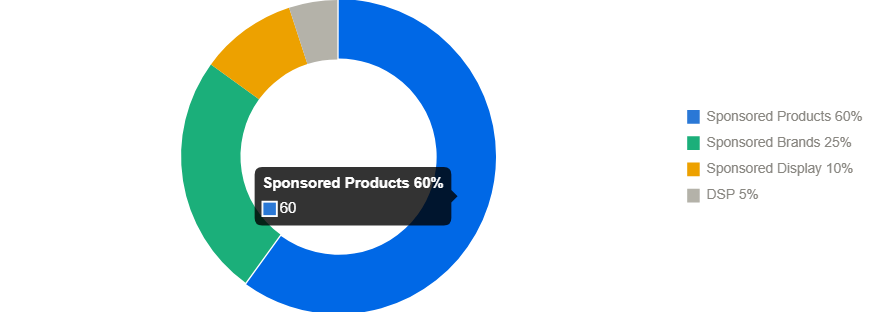
Recommended budget split for mid-size seller :
- Sponsored Products: 60%
- Sponsored Brands: 25%
- Sponsored Display: 10%
- DSP: 5%
What does an Amazon PPC specialist actually do?
- Keyword research and campaign architecture Building structured campaigns around exact, phrase, and broad match types — with isolated ad groups to control spend and gather clean data. This architecture determines whether campaigns can be optimised at all
- Bid management and ACoS control Continuously adjusting bids at the keyword level to hit target ACoS — the core profitability metric. Amazon specialists manage this in real-time using software and rule-based automation.
- Negative keyword harvesting Identifying and blocking search terms that generate clicks but zero sales — one of the fastest ways to improve campaign profitability without increasing budget.
- Search term report analysis Mining Amazon’s search term reports weekly to find converting search queries that can be added as exact match targets — gradually shifting spend from broad discovery to proven performers.
- Listing optimisation alignment Ensuring ad-driven traffic lands on a listing that converts. A specialist checks title, bullets, A+ content, and images against the keywords being targeted — because no PPC campaign can save a bad listing.
- Performance reporting and strategy reviews Producing weekly or bi-weekly reports covering ACoS, TACoS, ROAS, impressions, CTR, and conversion rate — and using these to guide strategic decisions about scaling or pausing campaigns.
Amazon PPC key metrics — complete glossary with benchmarks
| Metric | What it means | Good benchmark | Warning sign |
| ACoS | Ad spend ÷ ad revenue × 100 | <25% for most categories | >50% — spending more than earning |
| TACoS | Ad spend ÷ total revenue × 100 | <10% at scale | Flat or rising TACoS = organic growth stalling |
| ROAS | Ad revenue ÷ ad spend | >4× for mid-margin products | <2× — underperforming spend |
| CTR | Clicks ÷ impressions × 100 | 0.4–0.8% (Sponsored Products) | <0.2% — ad creative or targeting issue |
| CPC | Cost per click | Category-dependent | Rising CPC without rising CVR = margin squeeze |
| CVR | Orders ÷ clicks × 100 | >10% (good listing + right traffic) | <5% — listing or targeting problem |
| Impression share | Your impressions ÷ total available | >20% for target keywords | <5% — bid or relevance too low |
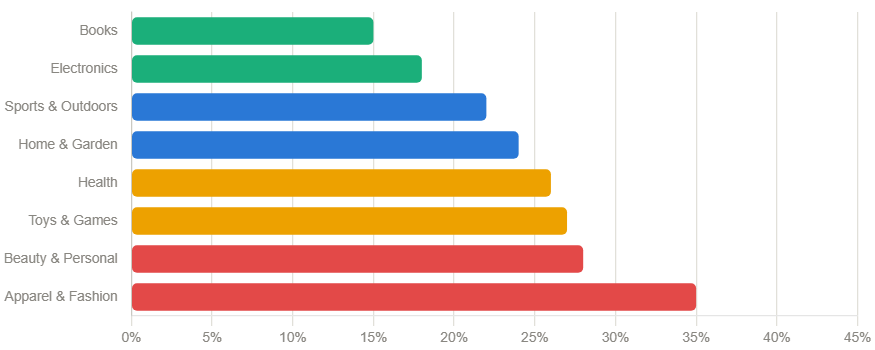
Average ACoS by Amazon product category (2024/2025 benchmarks):
| Category | Average ACoS | Difficulty |
| Books | 15% | Low competition |
| Electronics | 18% | Moderate |
| Sports & Outdoors | 22% | Moderate |
| Home & Garden | 24% | Moderate–High |
| Health & Personal Care | 26% | High |
| Toys & Games | 27% | Seasonal variation |
| Beauty & Personal Care | 28% | High |
| Apparel & Fashion | 35% | Very High |
Amazon specialist services — full breakdown
Listing optimisation (highest ROI service)
Keyword-rich title optimisation A9/A10 algorithm heavily weights the product title. Specialists structure titles with primary keyword first, followed by key attributes — brand, size, material, use case — within the 200-character limit. Impact: 15–40% increase in organic impressions
Bullet point conversion copy Five bullet points — each targeting a secondary keyword while addressing a specific buyer objection or benefit. Format: lead with the benefit, follow with the feature. Impact: 8–22% conversion rate improvement
A+ Content / Enhanced Brand Content Brand Registry sellers replace the default description with rich media content — comparison charts, lifestyle images, brand story modules. Amazon reports A+ Content increases conversion rates by 5–6% on average. Impact: 5–8% CVR lift (Amazon official data)
Backend search term optimisation 250-byte backend keyword field invisible to shoppers but indexed by Amazon. Specialists fill this with alternate spellings, competitor terms, and long-tail phrases. Impact: Broader keyword index coverage — no visible cost
Campaign stages and strategy
| Campaign stage | Strategy | Ad type used | Goal | Timeline |
| New product launch | Auto campaigns + broad match discovery | Sponsored Products | Gather search term data, drive first sales | Weeks 1–4 |
| Data harvest phase | Mine auto campaigns for exact match targets | Sponsored Products | Identify converting keywords | Weeks 3–8 |
| Scale phase | Exact match campaigns, aggressive bidding on winners | SP + Sponsored Brands | Maximise rank for proven keywords | Months 2–4 |
| Profitability phase | Reduce bids on high ACoS terms, harvest negatives | All types | Improve TACoS, protect margins | Month 4+ |
| Brand defence | Bid on branded keywords to prevent competitor conquest | Sponsored Brands | Own brand search results | Ongoing |
| Competitor conquest | Target competitor ASINs with Sponsored Display | Sponsored Display | Intercept competitor shoppers | Month 3+ |
In-house vs Amazon specialist agency — honest comparison
| Factor | In-house management | Amazon specialist / agency |
| Monthly cost | $3,500–$7,000 (salary + tools) | $500–$3,000 (retainer or % of spend) |
| Learning curve | 6–12 months to proficiency | Immediate — experienced from day one |
| Tool access | Budget-limited | Enterprise tools (Pacvue, Scale Insights, etc.) |
| Category knowledge | Single category experience | Cross-category benchmarks |
| Algorithm updates | Reactive — learned after impact | Proactive — tracked before rollout |
| Scalability | Headcount-limited | Scale budget without adding staff |
| Best for | 7-figure brands with dedicated team budget | All stages — especially early to mid growth |
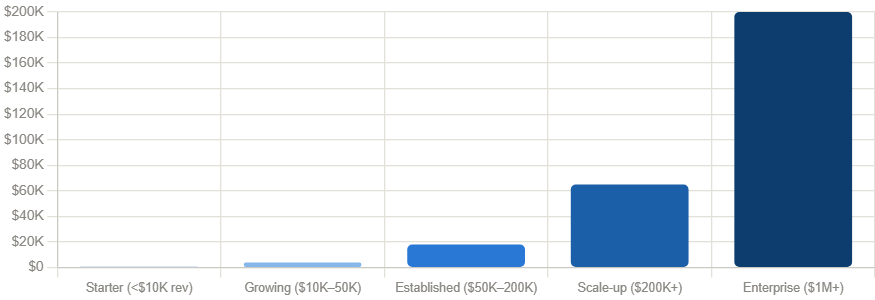
Amazon PPC cost and ROI benchmarks
| Seller stage | Monthly ad budget | Expected ACoS | Expected ROAS | Revenue driven by PPC | Specialist fee |
| Starter (new seller) | $500–$1,500 | 35–55% | 1.8–2.8× | $1,500–$4,500 | $300–$600/mo |
| Growing ($10K–50K/mo revenue) | $2,000–$8,000 | 22–35% | 2.8–4.5× | $8,000–$30,000 | $600–$1,500/mo |
| Established ($50K–200K/mo) | $8,000–$30,000 | 15–22% | 4.5–6.5× | $40,000–$150,000 | $1,500–$3,500/mo |
| Scale-up ($200K+/mo revenue) | $30,000–$100,000+ | 10–18% | 5.5–10× | $200,000+ | % of spend model |
The 6-step Amazon PPC optimisation process
Step 1 — Account audit and baseline Before touching a single campaign, a specialist analyses current ACoS, wasted spend, keyword coverage gaps, and campaign structure quality. This baseline determines the fastest wins.
Step 2 — Listing readiness check PPC traffic sent to a weak listing is wasted money. The specialist checks title keyword density, image quality, bullet point clarity, price competitiveness, and review count before increasing ad spend.
Step 3 — Campaign restructure Most seller accounts have poorly structured campaigns. Specialists rebuild with clean, single-purpose ad groups where bid control is precise and data is readable.
Step 4 — Keyword harvesting and negative mining Weekly search term reports reveal which shopper queries are triggering ads. Winners move to exact match; poor performers become negative keywords. This compounds over months into a highly efficient account.
Step 5 — Bid optimisation and dayparting Bids are adjusted based on time of day, day of week, device, and keyword performance. High-converting slots receive increased bids; low-converting periods are suppressed to protect daily budget.
Step 6 — Reporting and scaling decisions Monthly reports cover every key metric. Budget scaling decisions are made based on TACoS trajectory — if organic rank is improving alongside PPC investment, increased spend is justified.
Common Amazon PPC mistakes — and how specialists avoid them
Mistake: Running only automatic campaigns Fix: Auto campaigns are data collection tools, not optimisation tools. A specialist runs auto campaigns alongside tightly structured manual exact-match campaigns — using auto data to feed manual targeting.
Mistake: Optimising for ACoS instead of TACoS Fix: ACoS only measures ad revenue — it ignores organic sales impact. A rising ACoS paired with a falling TACoS is actually a sign of a healthy, scaling account.
Mistake: Setting and forgetting campaigns Fix: Amazon’s marketplace changes daily. Expert specialists make bid adjustments at least twice weekly and review search term reports every 7 days without exception.
Mistake: Bidding on irrelevant broad keywords Fix: Broad match keywords expose ads to thousands of irrelevant searches. Specialists use broad match only in dedicated discovery campaigns with strict negative keyword lists.
Mistake: Ignoring the listing while scaling ad spend Fix: A 2% conversion rate improvement on a listing receiving 10,000 clicks per month is worth more than any bid adjustment. Specialists treat listing quality as part of the PPC process.
How to choose the right Amazon PPC specialist — checklist
| Criteria | What to look for | Red flag |
| Proven track record | Case studies with before/after ACoS and revenue data | Only testimonials, no metrics |
| Category experience | Experience in your specific product category | Claims to be expert in “all categories” |
| Reporting transparency | Weekly/bi-weekly reports with full account access | Proprietary dashboards hiding raw data |
| Pricing model clarity | Clear fee structure: flat retainer or % of ad spend | % of revenue model — misaligned incentives |
| Tool stack | Uses professional software (Pacvue, Scale Insights, Perpetua) | Managing campaigns manually with no automation |
| Strategy approach | Customises to your margin, goals, and growth stage | One-size template applied to every client |
| Amazon compliance | Follows Amazon TOS strictly | Promises results that sound too good to be true |
Frequently asked questions
How much should I spend on Amazon PPC as a new seller?
Start with $500–$1,500 per month. The goal initially is data collection, not profitability — expect higher ACoS (35–55%) in the first 60–90 days as you learn which keywords convert. Scale budget only after identifying proven performers.
What is a good ACoS on Amazon?
ACoS depends on your product margin. Target ACoS should be below your profit margin percentage. If you make 35% profit per unit after fees and COGS, a 25% ACoS is profitable. Category averages range from 15% (books) to 35% (apparel).
How long does it take to see results from Amazon PPC?
Initial data appears within 2–4 weeks, but meaningful optimisation takes 60–90 days. Full campaign maturity typically takes 3–6 months. Patience is essential — PPC is a compounding process.
Do I need Brand Registry to run Amazon PPC?
No — Sponsored Product ads are available to all sellers. However, Brand Registry unlocks Sponsored Brand ads, Sponsored Brand Video ads, and A+ Content — all of which significantly increase conversion rates. Registration is highly recommended.
What is TACoS and why does it matter more than ACoS?
TACoS (Total Advertising Cost of Sale) = ad spend ÷ total revenue (organic + paid). A healthy account sees TACoS decline over time as organic sales grow — even as ad spend increases. This is the true measure of advertising efficiency.