




































































The Science of Pest Prevention in Sydney Offices: Why Pests Enter, How They Spread, and What Actually Stops Them
Effective pest control isn’t about reacting to what you can see — it’s about understanding pest biology, building science, and environmental triggers well enough to remove the conditions pests depend on. Once you understand why pests behave the way they do in a commercial environment, prevention stops being guesswork and becomes a set of predictable, controllable variables.
This guide breaks down the mechanics behind office pest problems in Sydney: the biology, the building factors, the environmental drivers, and the evidence-based interventions that address each one.
Why Pests Enter Buildings: The Three Drivers
Every pest infestation traces back to three needs. Remove any one, and the environment becomes significantly less viable.
1. Food
Pests require accessible calories. In an office, the primary sources are:
- Food residue on kitchen surfaces, appliances, and floors
- Waste in bins, particularly organic waste
- Crumbs and spills at desks and in meeting rooms
- Improperly stored pantry items
- Grease buildup behind and beneath appliances
Even trace amounts matter. A single German cockroach can survive on the film of grease behind a dishwasher; a mouse needs only about 3 grams of food per day.
2. Water
Moisture is often the limiting factor. Many pests can survive longer without food than without water:
- Cockroaches are strongly drawn to humid microenvironments (under sinks, near dishwashers, around floor drains)
- Rodents need a daily water source, though they can extract some from food
- Silverfish and booklice specifically require high humidity to survive and reproduce
Leaks, condensation, poor drainage, and dry P-traps in unused sinks all create the moisture pests seek.
3. Shelter and Harbourage
Pests need protected spaces to nest, breed, and hide:
- Wall cavities and ceiling voids
- Gaps behind and beneath appliances
- Warm equipment areas (server rooms, comms cupboards)
- Cluttered storage areas
- Cardboard and packing materials (cockroaches particularly favour corrugated cardboard)
Warmth accelerates breeding. Server rooms and comms cupboards, which run warm year-round, are common harbourage points that get overlooked because they’re rarely cleaned or inspected.
The Sydney Climate Factor: Why Local Conditions Matter
Sydney’s temperate, humid climate sustains pest activity across all four seasons, unlike colder climates where winter frost suppresses populations. Understanding the seasonal biology helps you anticipate rather than react.
Summer (November–February): Breeding Acceleration
Warmth directly accelerates insect metabolism and reproduction. German cockroaches, for example, complete their life cycle (egg to reproductive adult) in roughly 50–60 days at optimal temperatures around 30°C — meaning a small summer population can multiply rapidly if unchecked. Humidity compounds this by supporting egg viability and nymph survival.
Ants also increase foraging in warm weather, sending scouts further to establish new trails, and flies breed rapidly in exposed organic waste.
Autumn (March–May): The Rodent Shift
As overnight temperatures drop, rodents begin seeking warmer indoor harbourage. This is the critical window for exclusion work — sealing entry points before the migration indoors, not after rodents have already established nests.
Winter (June–August): Indoor Pressure Peaks
Rodent activity indoors peaks as external conditions become inhospitable. Heated buildings become attractive refuges. Cockroach activity slows in unheated areas but continues in warm zones like kitchen bench top and server rooms. This is when building fabric — gaps, seals, and entry points — is under the most pressure.
Spring (September–October): Population Rebound
Rising temperatures restart insect breeding cycles. Overwintering populations become active, and spider activity increases as they hunt the emerging insect population. Spring is the preparation window: addressing issues now prevents the summer surge.
Building Science: How Structure Determines Risk
The physical building is either your best defence or your biggest liability. Key factors:
Entry Point Vulnerability
Pests exploit remarkably small gaps:
- Mice: Can pass through gaps as small as 6mm (roughly the diameter of a pen)
- Rats: Can pass through gaps around 12mm and gnaw larger openings
- Cockroaches: Flatten their bodies to enter cracks under 3mm
- Ants: Enter through virtually any visible crack or gap
This is why sealing must be thorough. A single unsealed conduit penetration or worn door seal can undermine an otherwise well-protected building.
Why Expanding Foam Isn’t Enough
A common mistake is sealing gaps with expanding foam alone. Rodents can and do chew through it. Effective sealing combines:
- Fire-rated sealant (for compliance and durability) around penetrations
- Metal escutcheon plates or grommets where pipes and cables pass through walls
- Steel wool packed into larger gaps before sealing (rodents won’t chew through it)
- Proper door seals and thresholds that sit flush
The Multi-Tenant Complication
In shared buildings, your pest risk isn’t fully within your control. Pests migrate through:
- Shared wall cavities and ceiling voids
- Common service risers
- Shared loading docks and bin rooms
- Adjacent tenancies with poor hygiene
This is why offices in multi-tenant buildings need both internal controls and coordination with building management on shared-space maintenance.
The Intervention Framework: Matching Solutions to Causes
Effective prevention maps each intervention to the specific driver it addresses.
Removing Food Sources
| Intervention | What it addresses |
|---|---|
| Nightly bin emptying | Eliminates overnight food access |
| Sealed pantry storage | Removes accessible dry goods |
| Daily surface cleaning | Removes residue and crumbs |
| Behind/under-appliance cleaning | Eliminates hidden grease harbourage |
| No-desk-eating policy | Reduces distributed food sources |
Controlling Water
| Intervention | What it addresses |
|---|---|
| Same-day leak repair | Removes moisture source |
| Weekly flushing of unused sinks | Keeps P-traps sealed, blocks drain entry |
| HVAC condensation pan maintenance | Removes standing water |
| Immediate spill cleanup | Eliminates transient moisture |
Eliminating Harbourage and Entry
| Intervention | What it addresses |
|---|---|
| Sealing penetrations (fire-rated sealant + plates) | Blocks entry points |
| Door seals and self-closers | Prevents entry at high-traffic points |
| Same-day cardboard removal | Removes preferred nesting material |
| Decluttering storage | Reduces hiding and nesting spaces |
| Server room/comms cupboard inspection | Addresses overlooked warm harbourage |
Monitoring: Detection Before Infestation
The difference between a minor issue and a major infestation is usually detection speed. Cockroach and rodent populations grow exponentially, so catching activity early dramatically reduces the scale (and cost) of the response.
What to Look For
- Rodent droppings: Dark, 5–8mm, often along walls and in corners
- Cockroach droppings: Small, grain-like or pepper-like specks near harbourage
- Grease smears: Dark smears along walls where rodents travel repeatedly
- Gnaw marks: On cables, packaging, and timber
- Damaged packaging: Chewed or opened food containers
- Musty odours: Often indicate rodent nesting
- Live sightings: Particularly during daylight, which suggests a larger hidden population
Establishing Action Thresholds
Set clear, objective triggers rather than relying on judgment calls. A practical example: more than two sightings in a single zone within seven days triggers an inspection and corrective clean. Objective thresholds ensure consistent response regardless of who notices the activity.
Documentation for Compliance
Under NSW workplace health and safety obligations, maintaining clean, safe shared areas is a legal requirement, and many commercial pest control leases include pest management clauses. Documented monitoring — logging sightings, treatments, and corrective actions — provides both an audit trail and a way to track trends over time.
Why Integrated Pest Management (IPM) Outperforms Spraying
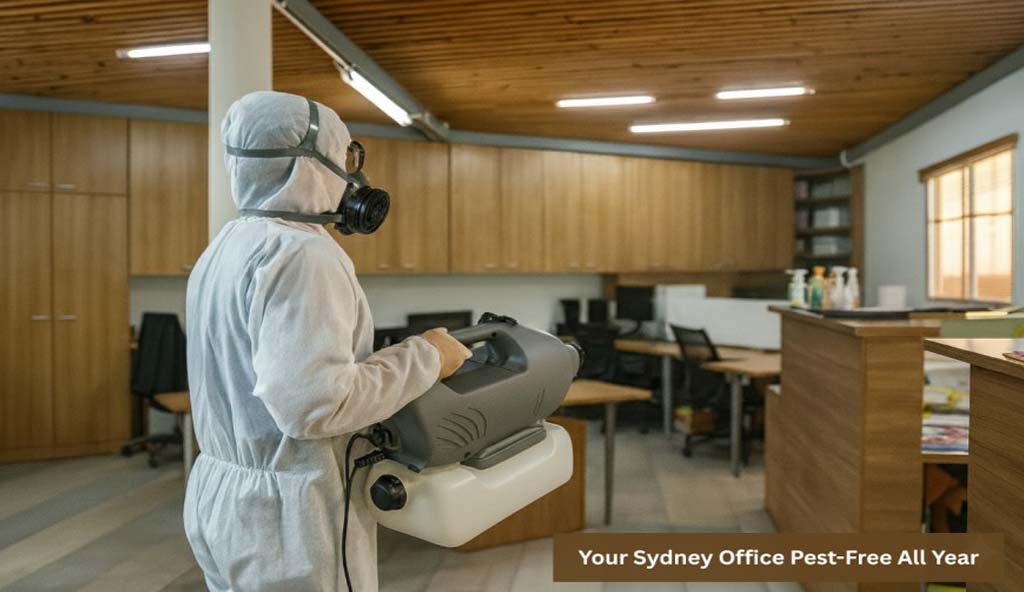
Traditional reactive Pest Control Sydney relies on treating visible pests. Integrated Pest Management (IPM) — the approach used by professional commercial providers — instead prioritises prevention and addresses root causes.
IPM combines:
- Inspection and identification — understanding what pests are present and why
- Exclusion — sealing entry points and removing harbourage
- Sanitation — removing food and water sources
- Monitoring — ongoing detection to catch issues early
- Targeted treatment — using pesticides only where necessary, and strategically
This is why IPM produces durable results while reactive spraying produces recurring problems: one addresses causes, the other only treats symptoms.
Putting It All Together: The Complete Implementation Guide
Understanding the science is the foundation — but turning it into a working system requires a structured, season-by-season plan with concrete checklists, timelines, and monitoring forms.
The CountDeals team has assembled exactly that: a comprehensive, practical resource covering the full seasonal action plan, detailed structural hardening steps, daily and weekly hygiene routines, moisture-control protocols, monitoring setup, and printable checklists for each quarter. If you want to translate the principles in this guide into a working prevention program, their complete guide to keeping your Sydney office pest-free all year round is the most thorough breakdown available — and a genuinely useful reference to keep on hand.
Summary
Pest prevention in Sydney offices comes down to systematically removing the three things pests need — food, water, and shelter — while sealing the building against entry and monitoring for early signs. Sydney’s year-round climate makes this a continuous effort rather than a seasonal one, but a structured, science-based approach makes it entirely manageable.
Reactive spraying treats what you can see. Prevention addresses why pests were ever there. The businesses that stay genuinely pest-free are the ones that commit to the second approach.