






































































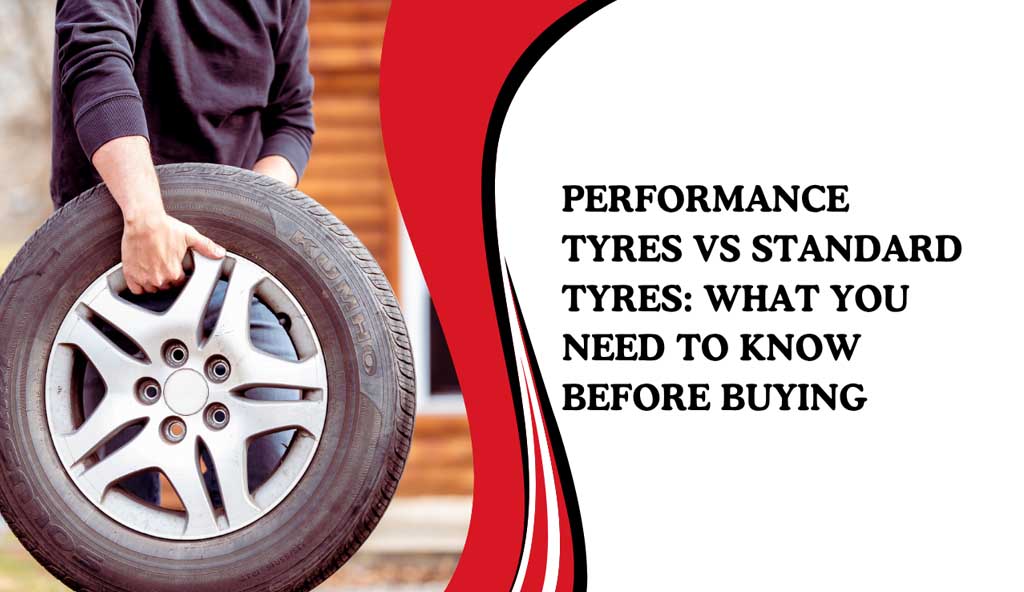
How to Read Your Tyre Sidewall: Decoding Every Number and Letter Before You Buy
Every tyre carries a string of numbers and letters stamped into its sidewall — and most drivers have no idea what any of it means. Yet this code tells you everything you need before buying a replacement: the exact size that fits your car, how much weight it can carry, how fast it’s rated for, and even how old it is.
Getting this wrong isn’t a minor error. Fit the wrong size, load rating, or speed rating and you risk poor handling, a failed roadworthy inspection, voided insurance, or a dangerous blowout. This guide decodes the entire sidewall, marking by marking, so you can buy with confidence.
The Main Tyre Size Code (Example: 225/45 R17 94W)
This is the string that matters most. Here’s what each part means, using 225/45 R17 94W as the example:
225 — Section Width (millimetres)
The width of the tyre from sidewall to sidewall, in millimetres. Here, 225mm. Wider tyres generally offer more grip but can slightly increase fuel consumption and road noise.
45 — Aspect Ratio (profile)
The height of the sidewall as a percentage of the width. Here, 45 means the sidewall height is 45% of 225mm. Lower numbers = a lower-profile tyre (shorter sidewall), which is common on performance tyres for sharper handling. Higher numbers mean a taller, more cushioned sidewall for a comfortable ride.
R — Construction
“R” means radial — the standard construction on virtually all modern passenger tyres. You may occasionally see “D” (diagonal/bias) on some trailers or older vehicles.
17 — Rim Diameter (inches)
The alloy wheel diameter the tyre is designed to fit, in inches. This tyre fits a 17-inch wheel. This must match your wheel exactly.
94 — Load Index
A coded number service representing the maximum weight the tyre can safely carry. It’s not the weight itself — it maps to a value on the load index chart. For example, 94 corresponds to roughly 670kg per tyre. Never fit a tyre with a lower load index than your vehicle specifies.
W — Speed Rating
A letter indicating the maximum speed the tyre is rated for. W, for instance, is rated to 270 km/h. This isn’t an invitation to drive that fast — it reflects the tyre’s engineering and heat tolerance. Fitting a lower speed rating than specified can affect handling and may void insurance.
The Speed Rating Chart (Most Common)
Speed ratings run alphabetically (with some historical quirks). The common passenger-car ratings, lowest to highest:
- T — up to 190 km/h (common on family cars and SUVs)
- H — up to 210 km/h (very common on sedans and hatches)
- V — up to 240 km/h (sportier vehicles)
- W — up to 270 km/h (performance vehicles)
- Y — up to 300 km/h (high-performance vehicles)
The key rule: match or exceed the speed rating specified for your vehicle. Higher-rated tyres are generally performance-oriented; standard everyday tyres typically sit in the T–H range.
The Load Index (Why It Matters)
The load index is easy to overlook but critical, especially for SUVs, 4WDs, utes, and anything that carries heavy loads or tows. Each index number corresponds to a specific maximum load in kilograms per tyre.
Fitting a tyre with too low a load index means the tyre isn’t engineered to carry your vehicle’s weight — a genuine safety risk that also affects roadworthiness. Always match or exceed the vehicle manufacturer’s specified load index, which you’ll find on the tyre placard (see below).
The DOT Date Code: How Old Is the Tyre?
This is the marking almost nobody checks — and it matters even on brand-new tyres, because rubber degrades with age regardless of use.
Look for a code beginning with “DOT” followed by characters ending in a four-digit number. Those last four digits are the manufacture date:
- The first two digits = the week of the year
- The last two digits = the year
So “2823” means the tyre was made in the 28th week of 2023.
Why it matters: buy tyres online have a shelf life. A “new” tyre that’s been sitting in a warehouse for years has already begun aging. As a general guideline, many manufacturers and safety bodies suggest tyres be replaced around 5–10 years from the manufacture date regardless of tread, and you should be wary of buying “new” tyres more than a couple of years old. Always check this code before accepting a fitted tyre.
Other Sidewall Markings Worth Knowing
- M+S (Mud and Snow): Indicates the tyre is rated for some mud and light snow use — common on all-terrain and all-season tyres.
- Treadwear / Traction / Temperature (UTQG): A US-origin grading system sometimes present. Treadwear is a comparative durability number; traction (AA, A, B, C) grades wet grip; temperature grades heat resistance.
- Rotation arrow: Directional tyres have an arrow showing which way they must roll. Fitting them backwards ruins wet performance.
- Tubeless / Tube Type: Virtually all modern passenger tyres are tubeless.
- Max pressure / Max load: The maximum cold inflation pressure and load — note this is the tyre’s maximum, NOT your car’s recommended pressure (which comes from the placard).
The Tyre Placard: Your Real Reference Point
Here’s the crucial distinction most people miss: the sidewall tells you what the tyre can do; your vehicle’s tyre placard tells you what your car needs.
The placard is a sticker usually found inside the driver’s door jamb, inside the fuel filler flap, or in the glovebox. It lists:
- The manufacturer’s recommended tyre size
- The correct load index and speed rating
- The recommended tyre pressures (front and rear, sometimes laden vs unladen)
When buying tyres, the placard — not the tyre currently fitted — is the authoritative source, because a previous owner may have fitted the wrong size. Match the placard specifications, then choose the tyre type that suits your driving.
From Reading the Sidewall to Choosing the Right Tyre
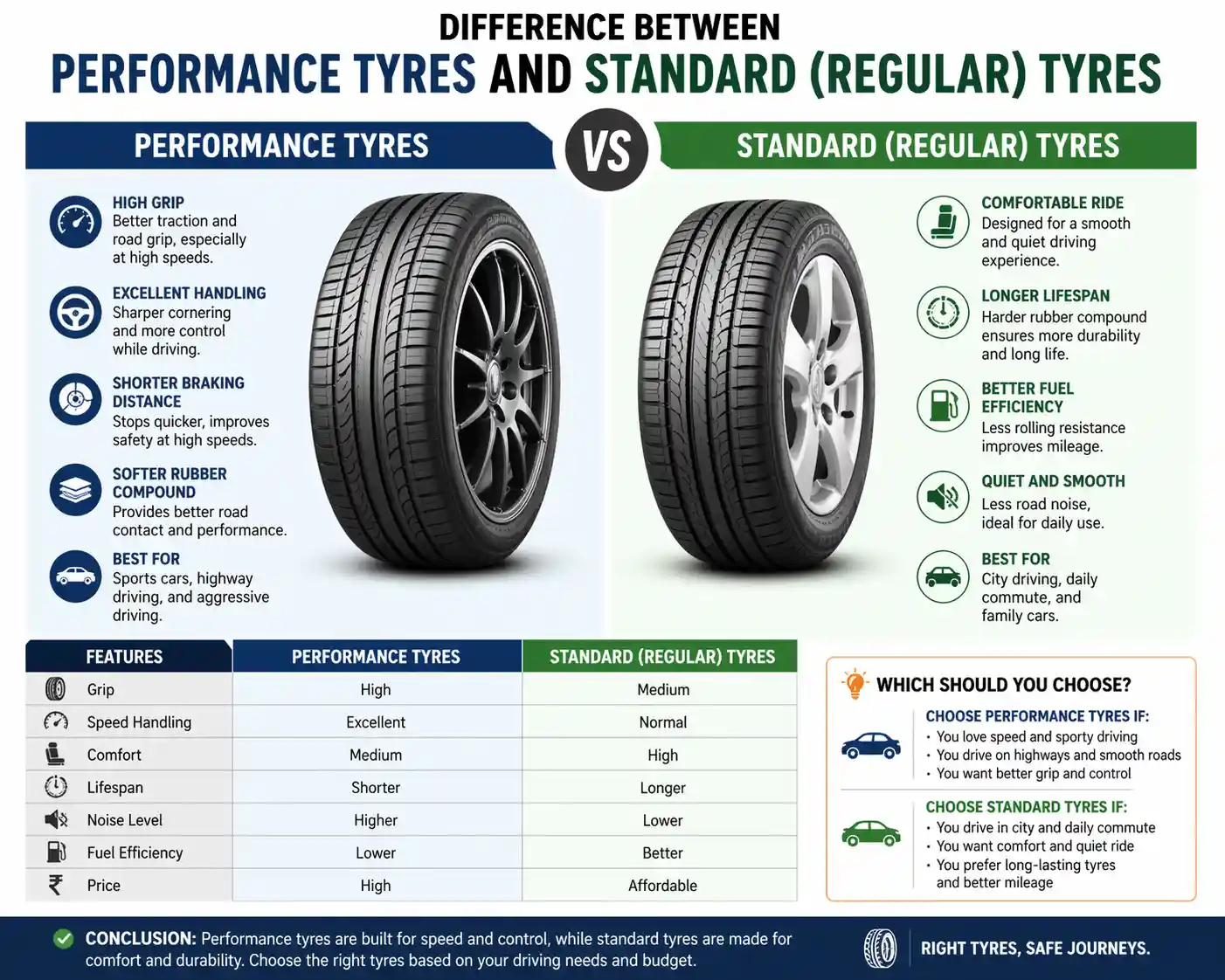
Decoding the sidewall tells you what will fit — but it doesn’t tell you which type of tyre to buy. Once you know your correct size, load, and speed rating, the next decision is the one that actually shapes your driving experience: performance versus standard tyres. That choice comes down to your driving style, your vehicle, the roads you drive, and the trade-offs between grip, comfort, longevity, and cost.
CountDeals has a clear, practical breakdown of exactly that decision: how performance and standard tyres differ in grip, handling, durability, fuel efficiency, and price, and how to match the right type to your needs. If you’ve decoded your sidewall and now need to choose, their guide to performance vs standard tyres is the natural next read to make an informed choice.